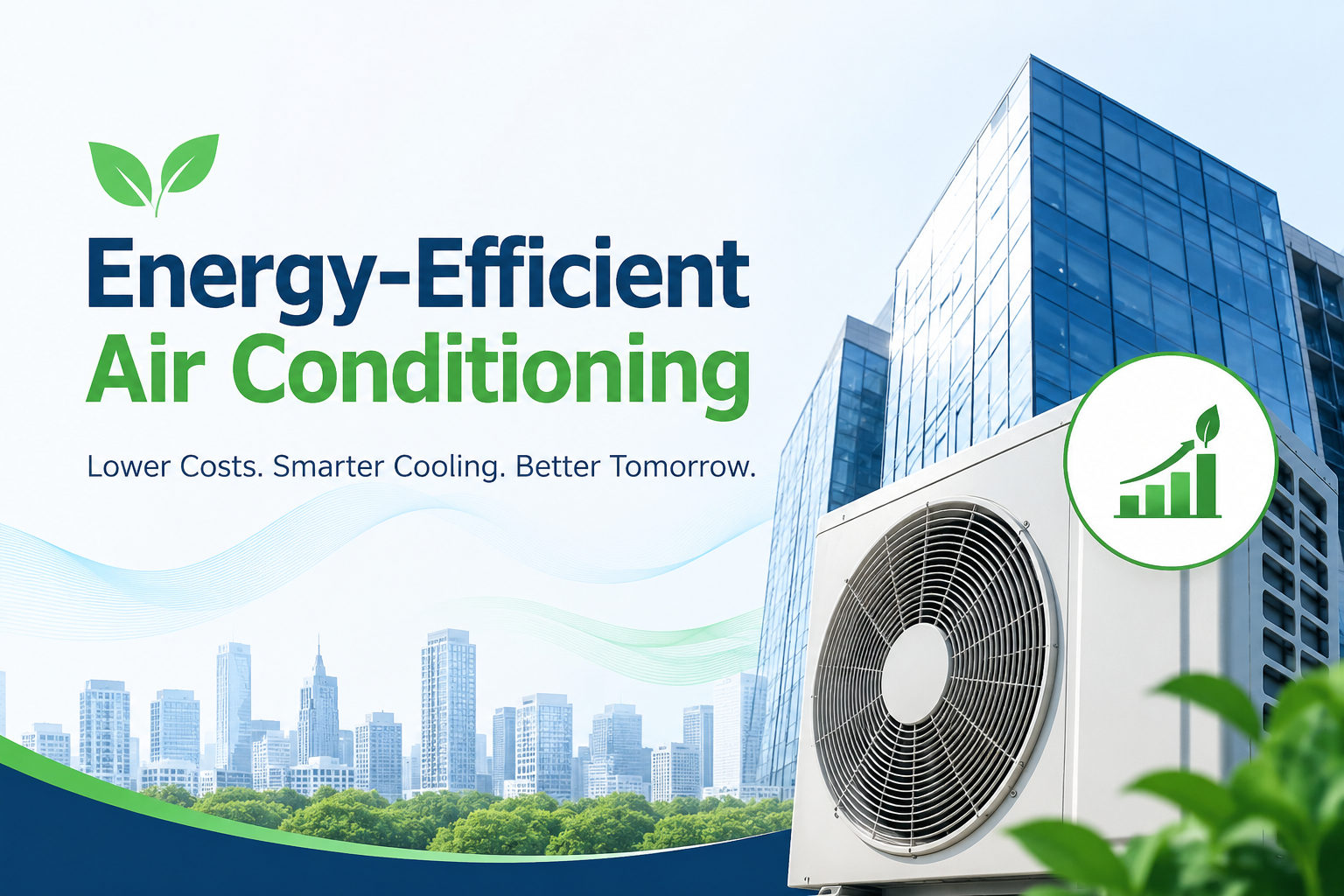
Energy costs are one of the largest operating expenses for commercial buildings. Whether it's an office, retail store, warehouse, or industrial facility, maintaining a comfortable indoor environment often requires significant energy consumption. Modern energy-efficient air conditioning systems provide a practical solution by reducing energy usage while improving performance and occupant comfort.
This article explores how businesses can lower operating costs through efficient HVAC technologies and smart cooling strategies.
Traditional air conditioning systems can consume large amounts of electricity, especially when operating continuously during warmer months. Older equipment often struggles to maintain consistent temperatures, leading to higher utility bills and increased maintenance requirements.
Energy-efficient HVAC systems are designed to:
Modern HVAC units use variable-speed compressors and fans that adjust cooling output based on demand. Instead of running at full capacity all the time, these systems operate more efficiently and consume less energy.
Advanced thermostats and building management systems allow facility managers to monitor and optimize cooling performance. Automated scheduling prevents unnecessary energy use during non-operating hours.
High-efficiency condensers and evaporators transfer heat more effectively, helping systems cool spaces faster while using less electricity.
Many modern systems include advanced filtration technologies that help remove airborne contaminants, creating healthier indoor environments for occupants.
One of the biggest advantages of upgrading to energy-efficient air conditioning is reduced energy consumption. Businesses often experience noticeable savings on monthly electricity expenses.
Efficient systems generally experience less strain during operation, reducing wear and tear and minimizing unexpected breakdowns.
Consistent temperature control improves employee productivity and customer satisfaction by maintaining comfortable indoor conditions.
Reducing energy usage also lowers a building's carbon footprint, helping organizations meet sustainability goals and environmental compliance requirements.
To achieve optimal performance, businesses should:
Selecting experienced HVAC professionals is essential when designing, installing, or maintaining commercial air conditioning systems. Working with industry specialists helps ensure systems are properly sized, optimized, and maintained for long-term efficiency.
Companies such as BDS Energy provide commercial HVAC and air conditioning solutions that help businesses improve energy efficiency, system reliability, and indoor comfort.
Energy-efficient air conditioning systems are a smart investment for commercial buildings looking to reduce operating costs while improving comfort and sustainability. By adopting modern HVAC technologies and implementing proactive maintenance strategies, organizations can achieve significant long-term savings and better overall building performance.